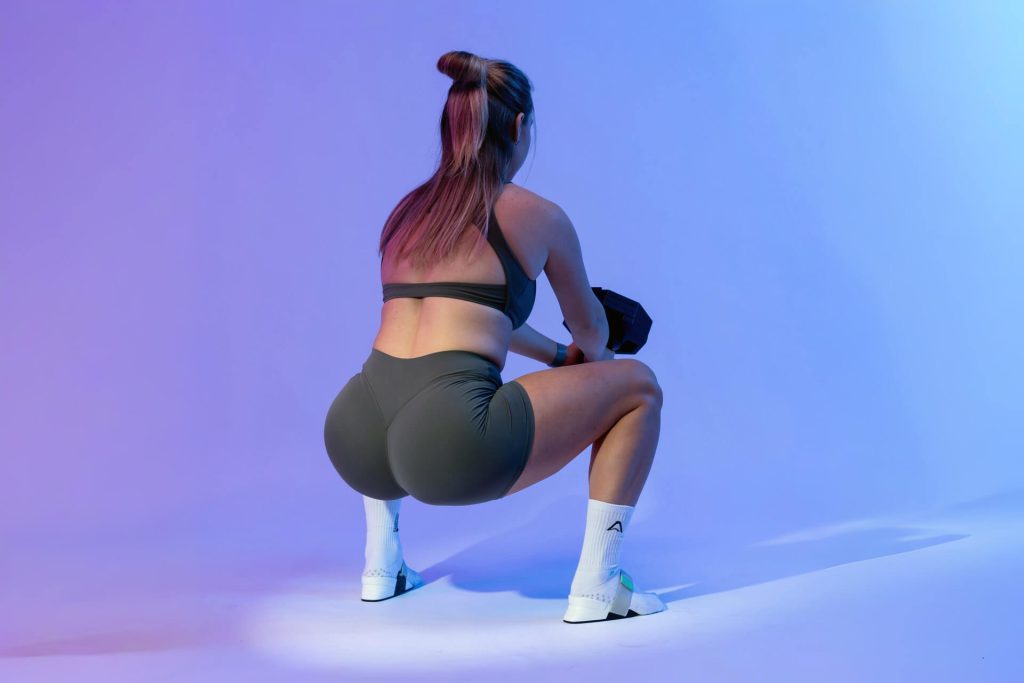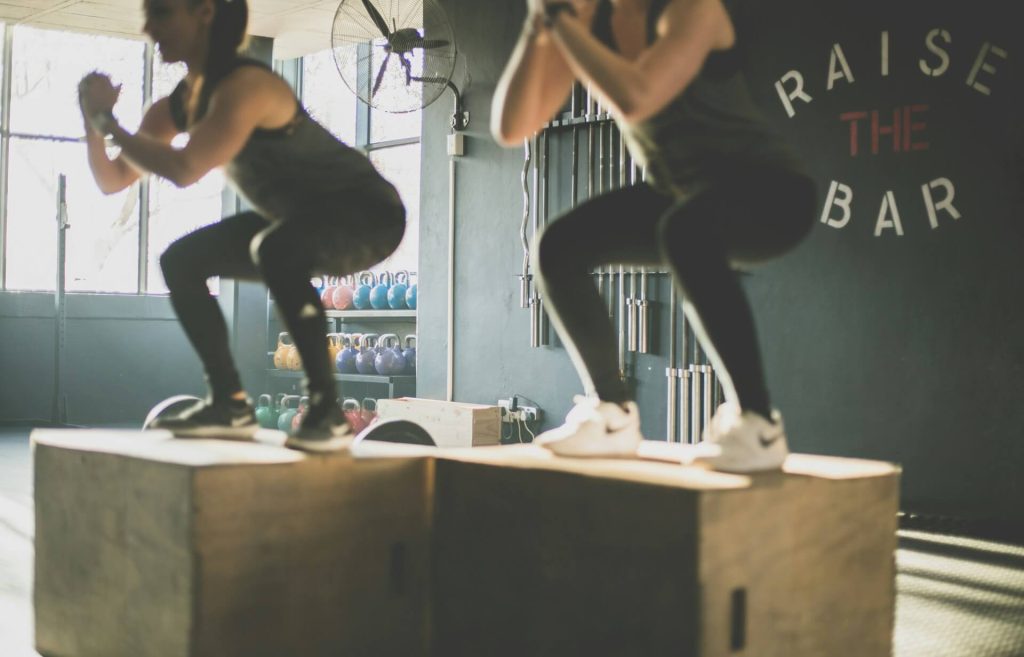

For decades one squat cue has survived every lifting trend – “keep your knees behind your toes”. It’s simple, it’s coachable, and it hits on injury prevention in a way that many other cues don’t. On social media it’s become almost a rule – knees forward = bad form, knees back = safe. The problem is that the squat, along with many other athletic movements, isn’t that binary. Two lifters can use the same cue and end up with completely different mechanics – one stays balanced and stable, the other shifts the load into the hips, pitches the chest forward, and cuts depth to keep the shins vertical.
That’s why the debate keeps raging on. People aren’t really arguing about a centimetre of knee travel, they’re arguing about what a good squat should feel like, and which joints should take the load. Modern biomechanics doesn’t replace one rule with another, but it does perhaps give us a better framework on which to move forward.
Quick context on me before we dive in – I’m Chris. I have a PhD in Sports Biomechanics from Loughborough University. I’ve spent the past 15 years working across elite sport and performance product development, supporting athletes and coaches, and working with development teams building tools that live or die by their impact on human movement. This article isn’t about taking sides – it’s about replacing a hard-and-fast rule with clearer principles you can apply in the real world.
What “knees over toes” really means (and what it doesn’t)
“Knees over toes” gets argued like it’s the ultimate point in your technical checklist. Either your knees cross an invisible line, or they don’t. That’s not how squats work. The knees are supposed to travel – what matters is when they travel, how they travel, and what the rest of the system does in response.
First, let’s define the phrase properly. Knees over toes doesn’t mean you push your knees forward at all costs, and it doesn’t mean you accept sloppy tracking. In biomechanical terms, forward knee travel is often solution for maintaining balance. As you descend into the squat, the knees move forward to help keep your centre of mass (including the bar) over your base of support, with the feet providing the grounding through pressure under the tripod. How much the knees travel depends on limb proportions, ankle range, stance, bar position, and even footwear.
It’s also worth separating two distinct movements that often get lumped together online. Forward knee travel is a sagittal-plane movement (knees moving over the toes). Knee collapse is a frontal-plane problem (knees caving in). One is often required for depth and maintaining upright positions, the other tends to be a control or load capacity issue.
So, when we talk about “allowing” the knees to pass the toes, we’re really talking about earning a position where the feet stay quiet and the knee moves forward as much as your anatomy and the squat variation demand – no more, no less.
The trade-off – knee travel and load distribution
The key point missing from most online arguments is that load never disappears, it simply redistributes. When you keep the knees behind the toes in a squat, you change the mechanics of the lift – typically reducing the moment at the knee and increasing demand at the hip. In Fry et al.’s classic biomechanics research [1], restricting forward knee travel was found to significantly reduce knee torque, but in turn substantially increase hip torque, essentially turning the squat into a more hip-dominant pattern even at equivalent depth.
There’s nothing inherently wrong with that – plenty of strong lifters squat with a hip-dominant pattern, but you’ll often see or feel compensations during the rep. Many lifters who chase vertical shins end up with a more pronounced hip hinge, a more inclined torso, and a bottom position that can be harder to keep stacked over the midfoot. For some lifters that’s manageable, for others “knees behind toes” starts to feel more like an unstable forward fold, particularly when ankle range or limb proportions already make depth challenging.
So, rather than asking “are my knees past my toes”, perhaps the right question is more like “what did that cue make my body do”. If it cleaned up your balance and kept the feet quiet & centred, great. If you want to bias towards posterior chain work, perfect. But if it pushed you into a chest-forward, hip-dominant, shallow squat, it’s probably time to explore other options.
The real drivers of knee stress – depth, load, and frequency
Once you stop treating forward knee travel as a hard-and-fast rule, the next step is to think in terms of dose. Knee demand in a single rep scales with two primary variables – depth and load. Demand increases when you combine deep knee flexion with high external load [2,3], particularly if you add speed, fatigue, or a setup that shifts pressure to the forefoot. That’s not a reason to fear depth or load, but a reminder that full range and high load is a capacity you build over time [3]. Your knees are unlikely to flare up just because they cross your toes [4], but because the tissues weren’t ready for that depth and load exposure.
This matters because it gives you options when you’re lifting. You don’t have to choose between ‘knees behind toes forever’ and ‘full-depth knee travel all the time’. In practice, joint-friendly progression looks boring – earn the range with stable pressure, add load gradually, and avoid combining multiple stressors at once (depth / load / speed / fatigue). Progress one variable at a time, and knees over toes squatting becomes a strength builder rather than a flare-up trigger.
When forward knee travel is a feature not a fault
For many lifters, forward knee travel isn’t something to ‘allow’ – it’s fundamentally part of what makes the squat work. If you want a squat that’s balanced, upright, and repeatable, particularly at depth, the knees generally need to travel forward to some degree. This is especially true in front squats, high bar squats, and Olympic receiving positions, where the torso stays more vertical and the quads do a larger share of the work [5,7]. In essence the forward knee travel works to keep the system centred, and the bar stacked over the midfoot.
It’s also basically how sport works. Sprint starts, cutting, deceleration and landing from height all involve the knee travelling forward into flexion while the trunk stays relatively upright over the feet. Training controlled knee-over-toe positions builds strength in the ranges athletes use most – deep knee flexion under load. In my opinion this is a safer option than simply ignoring these positions and hoping your body can cope when the time comes.
The key word throughout this discussion is ‘controlled’. These positions are most useful when the feet stay quiet, pressure stays centred, and the knees track over the second/third toes. That gives you a repeatable and upright torso position at depth, allowing you to (in time) build strong quads, resilient patellar tendons, and a stable squat that doesn’t turn into a chest-forward save under load.
When to dial it back (without becoming “anti-knees-over-toes”)
Forward knee travel is a tool, and its use will always depend on context. As with load and depth, forward knee travel is something you should dose deliberately. If you’re dealing with knee pain or sensitivity, particularly anterior or patellofemoral irritation [2,4], deep knee flexion under load (as well as fatigue and fast reversals) can be a common flare-up trigger. In that context, knees behind toes can act as a useful guardrail to reduce knee extensor demand [1] and keep you out of uncomfortable range while you rebuild tolerance.
The key is to treat it as a short-term constraint rather than a permanent belief. You can still train the squat, but manage the variables – reduce depth, slow the last third, and choose loads you can control without pressure moving to the forefoot. In many cases, split squats, step-ups, or front-loaded patterns can help you keep up training while reducing symptoms.
None of this is “anti-knees-over-toes”, it’s pro squat progression. The goal is always the same – build capacity in the range you want, but do it with a dose the tissues can realistically tolerate today.
We’ve already covered the two big guardrails for building controlled knee travel under the bar – keep the feet quiet and manage depth × load exposure. The remaining piece is the interface between you and the floor. For many lifters, controlled knee travel depends as much on the setup (heel lift / shoe / surface) enabling stability and midfoot pressure as the intent.
Ultraform Lift – heel elevation that supports controlled forward knee travel
The reason knees over toes lifting sometimes gets a bad reputation is that people confuse access with control. If knee over toe squats feel unstable, it’s rarely because your knees are too far forward – it’s often because your setup (heel lift / shoe / surface) is pulling pressure towards the forefoot.
A lot of generic wedges and slant boards raise the heel by either putting you on a steep and continuous decline, or a narrow contact area [6,7,8]. A common reaction here is a forefoot bias as you hit depth, with pressure drifting towards the toes, the toes start clawing, and the bottom position feels more like a balance correction than a stacked position. This unstable setup is often where flare-ups happen.
The right interface does the opposite – when the appropriate amount of heel elevation is delivered through a firm, stable, foot-shaped device, the knees can travel forward into depth without the foot collapsing or the pressure drifting to the forefoot. This allows lifters who need it to borrow dorsiflexion (maintaining tripod contact) to hit depth [5,6,7], while keeping the centre of pressure close to the midfoot [8].
Ultraform Lift is engineered around that idea. It gives you heel elevation, but with full-foot support and a firm platform, so you don’t end up perched on your forefoot at depth. In practice, it means you can access the knees over toes positions that can build quad and tendon capacity, while keeping the squat grounded and stable, and ultimately allowing you to chase predictable progression.
A stronger framework for knee travel in the squat
The “knees behind toes” cue in squatting hasn’t stuck around because it’s universally correct, but because it’s simple. The more useful truth is that forward knee travel is a lever you can use to refine training – restrict it and the squat becomes more hip-dominant, train it (with control) to build quad and patellar tendon capacity in deeper knee flexion.
The headline here also isn’t “knees forward at all costs” – there is a time and a place for both cues. Your focus should always be on controlled knee travel under quiet feet, with a stacked bar path and sensible management of depth × load exposure. If your knees are sensitive, dial back the dose and earn the flexion again. If you’re healthy, build forward knee travel capacity over time, particularly if your sport requires strength in those positions (many do).
Finally, remember that the interface matters – a stable and well-designed heel lift can make knees over toes positions feel grounded. This is where Ultraform Lift was engineered to help, making strong positions easier to own, and progression easier to predict.
You can contact us or book a call to talk more about your project, or discover how we can help with your research & writing needs.
References
[1] Fry, A.C, Smith, J.C, & Schilling, B.K. (2003). Effect of knee position on hip and knee torques during the barbell squat. Journal of Strength and Conditioning Research, 17(4), 629–633.
[2] Wallace, D.A, Salem, G.J, et al. (2002). Patellofemoral joint kinetics while squatting with and without an external load. Journal of Orthopaedic Sports Physical Therapy, 32(4), 141-148.
[3] Escamilla, R.F. (2001). Knee biomechanics of the dynamic squat exercise. Medicine and Science in Sports and Exercise, 33(1), 127–141.
[4] Kernozek, T.W, Gheidi, N. et al. (2018). Effects of anterior knee displacement during squatting on patellofemoral joint stress. Journal of Sport Rehabilitation, 27(3), 237–243.
[5] Sato, K, Fortenbaugh, D, & Hydock, D.S. (2012). Kinematic changes using weightlifting shoes on barbell back squat. Journal of Strength and Conditioning Research, 26(1), 28–33.
[6] Charlton, J.M, Hammond, C.A, et al. (2017). The effects of a heel wedge on hip, pelvis, and trunk biomechanics during squatting in resistance-trained individuals. Journal of Strength & Conditioning Research, 31(6), 1678–1687.
[7] Legg, H.S, Glaister, M. et al. (2016). The effect of weightlifting shoes on the kinetics and kinematics of the back squat. Journal of Sports Sciences, 35(5), 508–515.
[8] Duan, L, Fekete, G, et al. (2025). The influence of different heel heights on squatting stability/ A systematic review and network meta-analysis. Advances in the Biomechanics of Sports, 15(5), 2471.
This article was originally written for the Stonarke journal here.